Key Takeaways
-
Ecommerce SEO requires optimization across technical SEO, content, product pages, category pages, and user experience.
-
Keyword research forms the foundation of every successful ecommerce SEO strategy.
-
Product pages should feature unique descriptions, optimized titles, reviews, and structured data.
-
Category pages often provide significant opportunities for ranking competitive commercial keywords.
-
Technical SEO improvements support crawlability, speed, and user experience.
-
Content marketing helps attract potential customers throughout the buying journey.
-
Quality backlinks strengthen authority and search visibility.
-
Continuous monitoring and optimization are essential for long-term ecommerce success.
Ecommerce SEO Checklist for Online Stores
Launching an ecommerce website is only the first step toward online success. No matter how great your products are, customers need to find them before they can make a purchase.
With thousands of online stores competing for visibility, search engine optimization (SEO) has become one of the most effective ways to attract qualified traffic and increase sales.
However, ecommerce SEO involves much more than adding keywords to product pages. From technical SEO and website architecture to category optimization and content marketing, multiple factors influence how well your online store performs in search results.
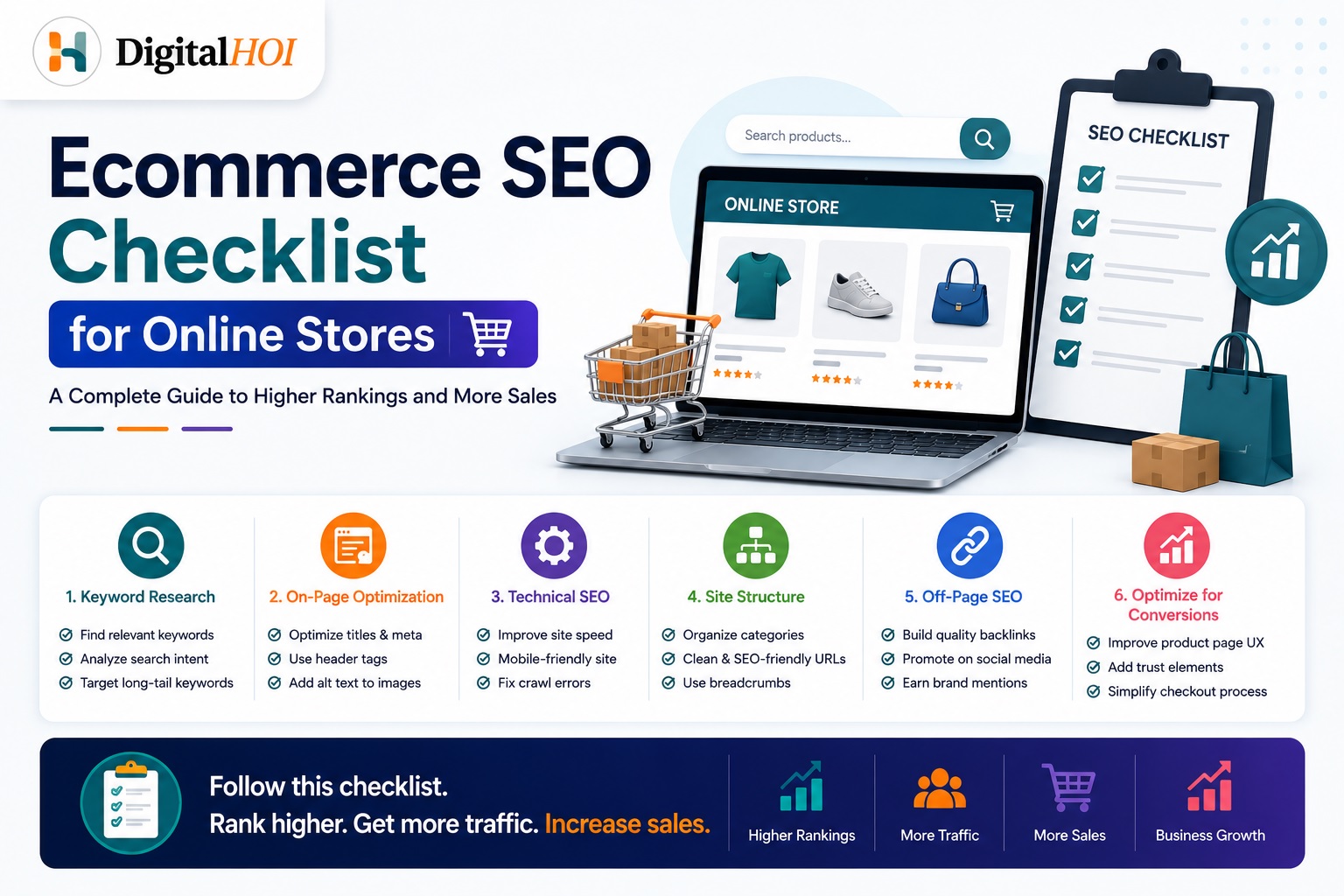
This Ecommerce SEO Checklist provides a step-by-step framework to help online retailers improve rankings, attract more customers, and generate sustainable organic growth.
Why Ecommerce SEO Matters
Organic search remains one of the highest-converting traffic sources for ecommerce websites.
Benefits of Ecommerce SEO include:
-
Increased organic traffic
-
Better product visibility
-
Lower customer acquisition costs
-
Improved user experience
-
Higher conversion opportunities
-
Sustainable long-term growth
Businesses that consistently optimize their stores often achieve stronger rankings and greater profitability over time.
Ecommerce SEO Checklist
Phase 1: Ecommerce SEO Foundation
✔ Define Your SEO Goals
Before implementing SEO, identify your objectives.
Examples include:
-
Increase organic traffic
-
Improve product rankings
-
Generate more sales
-
Reduce paid advertising dependence
-
Improve category page visibility
Clear goals help prioritize optimization efforts.
✔ Conduct Competitor Research
Analyze competing ecommerce websites.
Review:
-
Ranking keywords
-
Category structures
-
Product page content
-
Backlink profiles
-
Content marketing strategies
Competitor analysis often reveals opportunities and content gaps.
✔ Perform Ecommerce Keyword Research
Identify keywords customers use throughout the buying journey.
Focus on:
Product Keywords
-
Running Shoes
-
Wireless Earbuds
-
Gaming Laptop
Category Keywords
-
Men's Footwear
-
Electronics Accessories
Commercial Keywords
-
Best Running Shoes Online
-
Buy Wireless Earbuds
Informational Keywords
-
How to Choose Running Shoes
-
Laptop Buying Guide
Targeting multiple keyword types helps capture traffic at different stages of the customer journey.
Phase 2: Website Structure & Architecture
✔ Create an SEO-Friendly Site Structure
A logical website structure improves navigation and crawlability.
Example:
Home
→ Category
→ Subcategory
→ Product Page
A clear hierarchy helps search engines understand relationships between pages.
✔ Optimize URL Structure
Keep URLs:
-
Short
-
Descriptive
-
Keyword-focused
Example:
Good:
/mens-running-shoes/
Avoid:
/category?id=12345
SEO-friendly URLs improve usability and search visibility.
✔ Implement Breadcrumb Navigation
Breadcrumbs help:
-
Improve navigation
-
Enhance user experience
-
Strengthen internal linking
-
Support search engine understanding
Example:
Home > Men's Shoes > Running Shoes > Product
Phase 3: Product Page Optimization
✔ Optimize Product Titles
Product titles should:
-
Include primary keywords
-
Clearly describe products
-
Remain user-friendly
Example:
Men's Lightweight Running Shoes – Breathable Sports Footwear
✔ Write Unique Product Descriptions
Avoid using manufacturer-provided descriptions.
Instead:
-
Highlight benefits
-
Explain features
-
Address customer concerns
-
Include relevant keywords naturally
Unique content improves ranking potential.
✔ Optimize Product Images
Every product image should include:
-
Descriptive file names
-
Compressed image sizes
-
Alt text
Example:
wireless-earbuds-black.jpg
Proper image optimization improves page performance and accessibility.
✔ Add Customer Reviews
Reviews provide:
-
Fresh content
-
Trust signals
-
User-generated keywords
-
Conversion benefits
Customer reviews can improve both rankings and sales.
✔ Optimize Product Meta Tags
Ensure every product page includes:
Optimized Title Tag
Meta Description
Heading Structure
Canonical Tags
Metadata helps improve click-through rates and search relevance.
Phase 4: Category Page Optimization
✔ Create SEO-Friendly Category Content
Category pages should include:
-
Keyword-focused introductions
-
Helpful buying information
-
Internal links
-
User-friendly navigation
Many category pages rank for high-volume commercial keywords.
✔ Optimize Category Metadata
Include:
-
Unique title tags
-
Meta descriptions
-
H1 headings
-
Supporting content
Category optimization often produces significant traffic gains.
✔ Add Internal Links
Link categories to:
-
Subcategories
-
Product pages
-
Related content
Internal linking strengthens topical relevance and crawlability.
Phase 5: Technical Ecommerce SEO
✔ Ensure Mobile Optimization
Mobile commerce continues to grow rapidly.
Verify:
-
Responsive design
-
Mobile usability
-
Fast load speeds
-
Easy navigation
Google prioritizes mobile-first indexing.
✔ Improve Website Speed
Fast websites improve:
-
Rankings
-
User experience
-
Conversion rates
Focus on:
-
Image optimization
-
Caching
-
Code minification
-
Server performance
✔ Secure Your Website with HTTPS
Security is essential for ecommerce.
HTTPS helps:
-
Protect user data
-
Build trust
-
Support search rankings
Every ecommerce store should use SSL certificates.
✔ Submit XML Sitemap
An XML sitemap helps search engines discover pages efficiently.
Include:
-
Product pages
-
Category pages
-
Important content pages
Update regularly as inventory changes.
✔ Fix Crawl Errors
Regularly monitor:
-
Broken links
-
Redirect chains
-
Indexation issues
-
Server errors
Technical issues can limit SEO performance.
Phase 6: Ecommerce Schema Markup
✔ Implement Product Schema
Product schema helps search engines understand:
-
Product names
-
Prices
-
Ratings
-
Availability
Schema can improve search result visibility.
✔ Add Review Schema
Review schema may support:
-
Star ratings
-
Rich snippets
-
Increased click-through rates
✔ Use Breadcrumb Schema
Breadcrumb schema improves search result presentation and site structure understanding.
Phase 7: Content Marketing
✔ Create Buying Guides
Examples:
-
Best Running Shoes for Beginners
-
Laptop Buying Guide
Buying guides attract informational traffic.
✔ Publish Product Comparison Articles
Examples:
-
iPhone vs Samsung Comparison
-
Best Budget Laptops
Comparison content often attracts high-intent visitors.
✔ Build Topic Clusters
Examples:
Ecommerce SEO
→ Product Page SEO
→ Category Page SEO
→ Ecommerce Keyword Research
→ Technical SEO for Ecommerce
Topic clusters strengthen topical authority.
✔ Maintain a Consistent Publishing Schedule
Regular content creation supports:
-
Freshness
-
Authority
-
Traffic growth
Consistency often outperforms sporadic publishing.
Phase 8: Off-Page SEO
✔ Build Quality Backlinks
Focus on:
-
Industry publications
-
Resource pages
-
Guest contributions
-
Digital PR
Authority links strengthen rankings.
✔ Promote Content
Distribute content through:
-
Social media
-
Email marketing
-
Industry communities
Content promotion helps increase visibility and link opportunities.
✔ Monitor Brand Mentions
Track unlinked brand mentions and convert them into backlinks when possible.
Phase 9: SEO Performance Tracking
✔ Set Up Google Search Console
Monitor:
-
Indexation
-
Search performance
-
Technical issues
-
Keyword visibility
✔ Configure Google Analytics
Track:
-
Organic traffic
-
User behavior
-
Ecommerce conversions
-
Revenue attribution
✔ Monitor Keyword Rankings
Track:
-
Product keywords
-
Category keywords
-
Commercial keywords
Ranking data helps identify growth opportunities.
✔ Measure Conversion Performance
Monitor:
-
Sales
-
Revenue
-
Conversion rates
-
Customer acquisition
SEO success should ultimately be measured by business outcomes.
Common Ecommerce SEO Mistakes to Avoid
Avoid these common mistakes:
❌ Duplicate product descriptions
❌ Thin category pages
❌ Poor site structure
❌ Slow loading pages
❌ Missing schema markup
❌ Broken links
❌ Ignoring mobile users
❌ Weak internal linking
❌ Neglecting content marketing
Fixing these issues often produces meaningful SEO improvements.
Grow Your Online Store with Ecommerce SEO
A successful ecommerce SEO strategy requires more than isolated optimizations. It requires a comprehensive approach that improves visibility, enhances user experience, and drives sustainable sales growth.
At DigitalHOI, our Ecommerce SEO Services help online retailers optimize their stores, improve product rankings, increase organic traffic, and generate more revenue through proven SEO strategies.
Whether you're launching a new ecommerce website or scaling an established online store, our team can help create a customized SEO roadmap for growth.