Key Takeaways
-
Category pages are among the most valuable SEO assets for ecommerce websites.
-
They often target high-volume commercial keywords with strong purchase intent.
-
Effective category page optimization starts with keyword research and user-focused content.
-
Unique category descriptions help improve relevance and rankings.
-
Internal linking strengthens site architecture and topical authority.
-
Technical optimization, page speed, and mobile usability significantly impact performance.
-
Proper schema implementation can improve search visibility.
-
Category pages should balance SEO optimization with user experience and conversion goals.
Ecommerce Category Pages Optimization
When most ecommerce businesses think about SEO, they focus heavily on product pages. While product pages are important, category pages often represent the biggest organic traffic opportunity for an online store.
Why?
Because category pages typically target broader, higher-volume keywords that customers use when exploring products before making a purchase decision.
For example, instead of searching for a specific product model, users may search for:
-
Running Shoes
-
Men's Watches
-
Wireless Earbuds
-
Office Chairs
-
Skincare Products
These searches often have substantial search volume and strong commercial intent.
A well-optimized category page can rank for hundreds of related keywords, attract highly qualified visitors, and drive significant revenue.
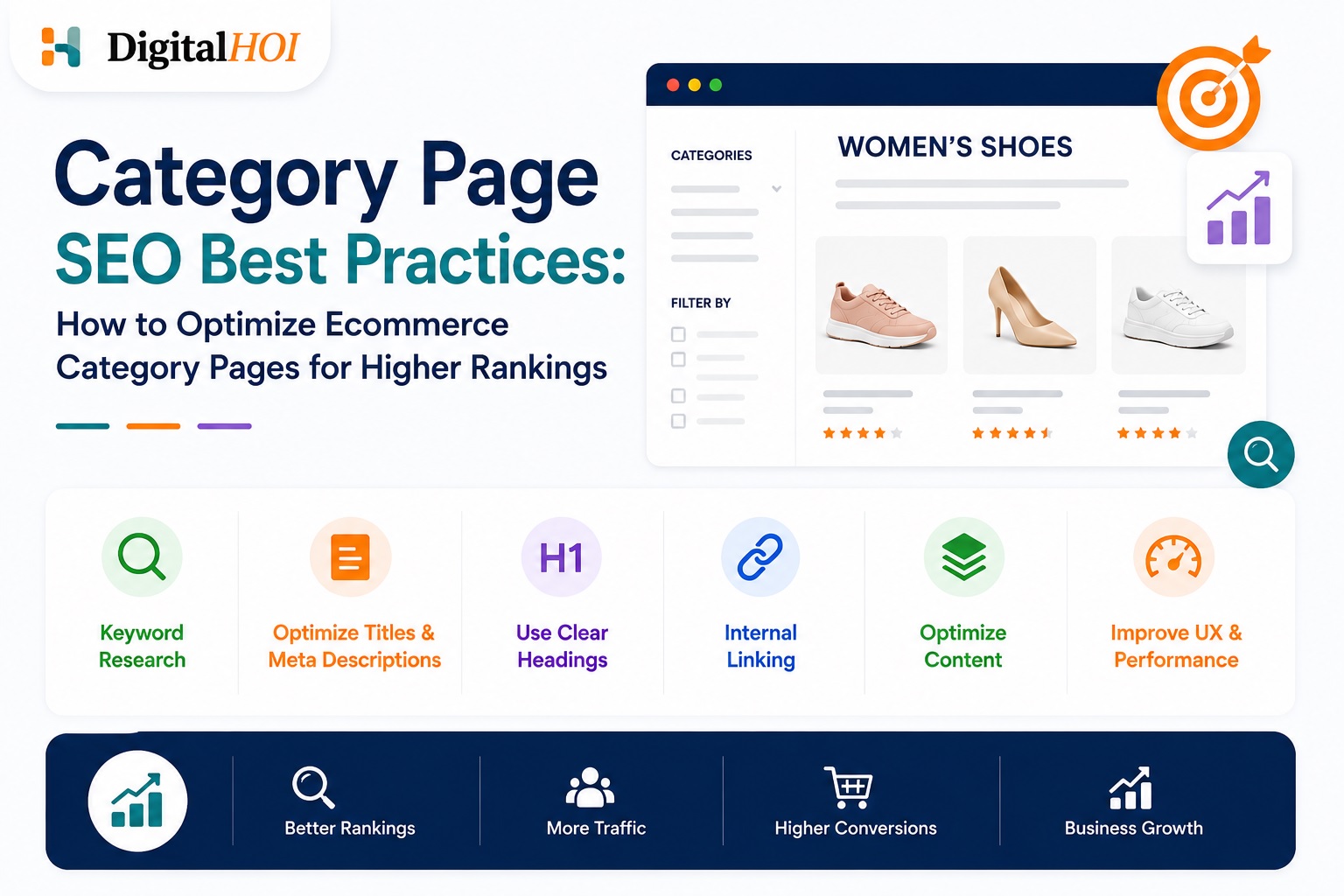
In this guide, we'll explore the most effective Category Page SEO best practices to help ecommerce businesses improve rankings, increase visibility, and generate more sales.
What is a Category Page?
A category page groups similar products under a common theme or classification.
Examples include:
Fashion Store
-
Men's Clothing
-
Women's Footwear
-
Sportswear
Electronics Store
-
Smartphones
-
Laptops
-
Wireless Accessories
Furniture Store
-
Office Chairs
-
Dining Tables
-
Bedroom Furniture
Category pages help users browse products while providing search engines with important information about your inventory structure.
Why Category Pages Matter for Ecommerce SEO
Many ecommerce websites receive a significant percentage of their organic traffic from category pages.
Benefits include:
Higher Search Volumes
Category keywords often attract more searches than individual product terms.
Strong Commercial Intent
Users searching category terms are often close to making a purchase.
Improved User Experience
Category pages simplify product discovery.
Better Internal Linking
They connect related products and content throughout the website.
Scalability
One category page can rank for hundreds of keyword variations.
For many online stores, category pages become major revenue-generating assets.
Common Ecommerce Category Page SEO Mistakes
Before discussing optimization strategies, let's look at common mistakes.
Thin Category Pages
Many category pages contain little or no descriptive content.
Duplicate Metadata
Using identical title tags and descriptions across categories.
Poor Internal Linking
Failing to connect related pages.
Slow Loading Pages
Large product listings can affect performance.
Weak Keyword Targeting
Not aligning categories with search demand.
These issues can significantly reduce ranking potential.
1. Conduct Category-Level Keyword Research
Successful category page optimization begins with keyword research.
Focus on identifying:
Primary Keywords
Example:
-
Running Shoes
-
Men's Watches
-
Office Furniture
Secondary Keywords
Example:
-
Best Running Shoes
-
Sports Running Shoes
-
Lightweight Running Shoes
Long-Tail Keywords
Example:
-
Running Shoes for Beginners
-
Men's Sports Running Shoes
Keyword research helps align category pages with customer search behavior.
2. Create SEO-Friendly Category URLs
URLs should be:
-
Short
-
Descriptive
-
Keyword-focused
Example:
Good:
/mens-running-shoes/
Avoid:
/category-12345/
Clean URLs improve user experience and search engine understanding.
3. Optimize Category Page Titles
Title tags remain one of the most important on-page ranking factors.
Effective titles should:
-
Include primary keywords
-
Stay within recommended length limits
-
Encourage clicks
Example:
Men's Running Shoes | Lightweight & Performance Footwear
Well-crafted titles improve both rankings and click-through rates.
4. Write Compelling Meta Descriptions
Meta descriptions help users decide whether to visit your page.
Include:
-
Target keywords
-
Product benefits
-
Clear value propositions
Example:
Explore premium men's running shoes designed for comfort, speed, and performance. Shop top brands and styles online.
Compelling descriptions can improve organic click-through rates.
5. Add Unique Category Content
One of the biggest SEO mistakes is publishing category pages without supporting content.
Include a short introduction that:
-
Describes the category
-
Explains available products
-
Addresses customer needs
-
Naturally incorporates keywords
Example:
"Our collection of men's running shoes includes lightweight trainers, performance footwear, and long-distance running shoes designed for athletes of all skill levels."
Unique content helps search engines understand page relevance.
6. Use Proper Heading Structure
A clear heading structure improves readability and SEO.
Recommended format:
H1
Primary Category Name
Example:
Men's Running Shoes
H2
Subcategories
Popular Brands
Buying Guide
Featured Collections
Logical content hierarchy supports user experience and crawlability.
7. Optimize Product Listings
Category page products should include:
-
Optimized product titles
-
High-quality images
-
Clear pricing information
-
User ratings
-
Availability status
Product listings influence both user engagement and conversions.
8. Improve Internal Linking
Internal links strengthen relationships between pages.
Link category pages to:
- Subcategories
- Product Pages
- Buying Guides
- Blog Articles
- Related Categories
Strong internal linking supports topical authority and crawlability.
9. Implement Breadcrumb Navigation
Breadcrumbs improve:
-
User navigation
-
Internal linking
-
Search engine understanding
Example:
Home > Men's Shoes > Running Shoes
Breadcrumbs enhance both usability and SEO.
10. Use Product Category Schema Markup
Schema helps search engines understand page content.
Useful schema types include:
- Breadcrumb Schema
- Item List Schema
- Product Schema
Structured data can improve search result visibility and support rich snippets.
11. Optimize Category Page Images
Image optimization includes:
- Descriptive file names
- Alt text
- Compression
- Responsive formats
Example Alt Text:
Men's Lightweight Running Shoes
Optimized images improve accessibility and page performance.
12. Improve Page Speed
Category pages often contain large numbers of products and images.
Optimization techniques include:
- Image compression
- Lazy loading
- Browser caching
- Code minification
Faster pages improve rankings and user experience.
13. Ensure Mobile-Friendly Design
Most ecommerce traffic now originates from mobile devices.
Category pages should provide:
- Responsive layouts
- Easy navigation
- Mobile-friendly filters
- Fast load times
Mobile usability directly impacts both rankings and conversions.
14. Add Filtering Without Creating SEO Problems
Filters improve user experience but can create duplicate content issues.
Examples:
- Price filters
- Color filters
- Brand filters
- Size filters
Best practices include:
- Canonical tags
- Controlled indexing
- URL parameter management
Proper filter management protects SEO performance.
15. Include Buying Guide Content
Adding educational content can strengthen category relevance.
Examples:
How to Choose Running Shoes
Best Office Chairs for Remote Work
Laptop Buying Guide
Informational content helps attract additional search traffic while supporting purchasing decisions.
Category Page SEO vs Product Page SEO
|
Category Pages |
Product Pages |
|
Target broader keywords |
Target specific products |
|
Higher search volume |
Higher conversion intent |
|
Support product discovery |
Support direct purchases |
|
Rank for keyword variations |
Rank for specific searches |
|
Generate scalable traffic |
Generate product-specific sales |
Both page types are essential components of a successful Ecommerce SEO strategy.
Measuring Category Page SEO Success
Track performance using:
- Organic Traffic
- Keyword Rankings
- Conversion Rates
- Revenue Attribution
- Click-Through Rates
- User Engagement Metrics
Monitoring these metrics helps identify opportunities for ongoing improvement.
Improve Ecommerce Rankings with Strategic Category Page SEO
Well-optimized category pages can become powerful traffic and revenue drivers for online stores.
At DigitalHOI, our Ecommerce SEO Services help businesses optimize category pages, product pages, technical SEO, site architecture, and content strategies to improve rankings and increase sales.
Whether you're managing a Shopify, WooCommerce, Magento, or custom ecommerce website, our team can help build a scalable SEO strategy designed for long-term growth.