Key Takeaways
- Product pages are among the most important revenue-generating assets on ecommerce websites.
- Effective Product Page SEO starts with keyword research and search intent alignment.
- Unique product descriptions outperform duplicate manufacturer content.
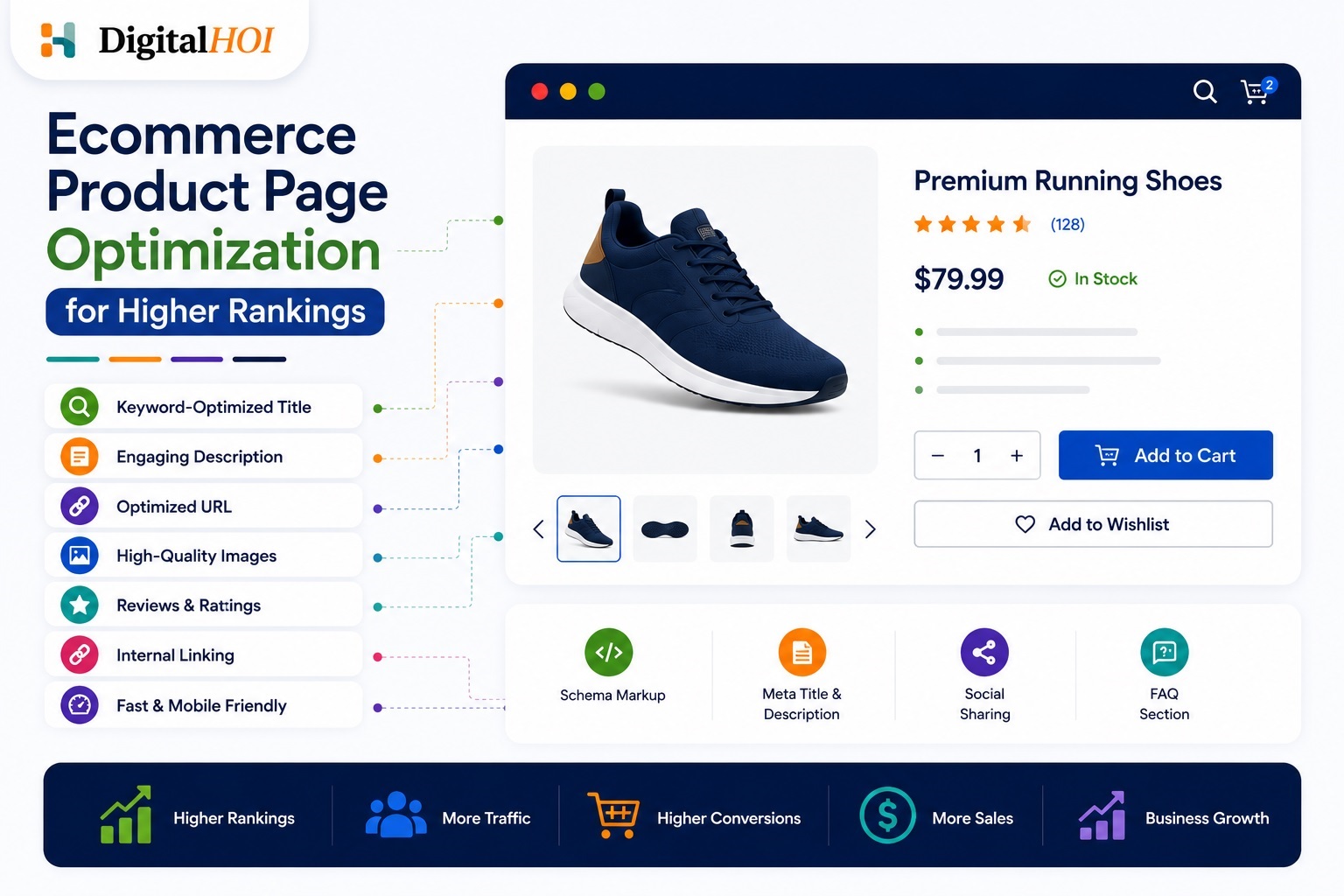
- Optimized titles, metadata, images, and structured data improve visibility.
- Customer reviews and FAQs strengthen both SEO and user trust.
- Mobile optimization and page speed directly impact rankings and conversions.
- Internal linking helps search engines understand product relationships.
- Continuous testing and optimization are essential for long-term ecommerce success.
Product Page SEO Guide: How to Optimize Product Pages for Higher Rankings
For ecommerce websites, product pages are where search visibility turns into revenue.
A potential customer discovers your product through Google, visits the product page, reviews the information, compares options, and decides whether to make a purchase. Every step in this process is influenced by how well your product page is optimized.
Unfortunately, many ecommerce businesses make the mistake of using manufacturer descriptions, poor-quality images, generic titles, or incomplete product information. As a result, their product pages struggle to rank in search results and fail to convert visitors into customers.
A properly optimized product page can help improve search engine visibility, increase click-through rates, attract qualified buyers, and generate more sales.
This guide explains the most effective Product Page SEO strategies for ecommerce websites.
What is Product Page SEO?
Product Page SEO is the process of optimizing individual product pages to improve their visibility in search engines and attract customers searching for specific products.
The goal is to help product pages rank for relevant search terms while providing an excellent user experience that encourages purchases.
Product page optimization includes:
-
Keyword research
-
Product title optimization
-
Product descriptions
-
Image optimization
-
Structured data implementation
-
User experience improvements
-
Internal linking
-
Conversion optimization
When done correctly, Product Page SEO helps generate highly targeted organic traffic with strong purchase intent.
Why Product Page SEO Matters
Many ecommerce searches are product-focused.
Examples include:
-
Buy wireless earbuds online
-
Running shoes for men
-
Office chair under ₹10,000
-
Bluetooth speaker with long battery life
Users searching these terms are often close to making a purchase.
Optimized product pages help:
Improve Search Rankings
Increase visibility for product-related keywords.
Drive Qualified Traffic
Attract users actively searching for products.
Increase Click-Through Rates
Improve search result engagement.
Enhance User Experience
Provide relevant information that supports purchasing decisions.
Boost Conversions
Turn more visitors into customers.
For many ecommerce businesses, product pages represent the highest-value SEO assets on the website.
Product Page SEO Checklist
1. Conduct Product Keyword Research
Every optimization effort should begin with keyword research.
Identify keywords that customers use when searching for products.
Examples:
Primary Keywords
-
Wireless Earbuds
-
Running Shoes
-
Gaming Laptop
Long-Tail Keywords
-
Wireless Earbuds with Noise Cancellation
-
Men's Lightweight Running Shoes
-
Best Gaming Laptop Under ₹80,000
Commercial Intent Keywords
-
Buy Wireless Earbuds Online
-
Best Running Shoes for Beginners
Targeting the right keywords ensures your page aligns with user search intent.
2. Optimize Product Titles
Product titles are among the most important on-page SEO elements.
An effective title should:
-
Include primary keywords
-
Clearly describe the product
-
Remain readable and user-friendly
Example:
Wireless Bluetooth Earbuds with Active Noise Cancellation
Avoid:
Product Model XZ-1000
Descriptive titles help both search engines and customers understand the product.
3. Create Unique Product Descriptions
One of the most common ecommerce SEO mistakes is using manufacturer-provided descriptions.
Duplicate content reduces ranking potential.
Instead, create original descriptions that explain:
-
Product features
-
Key benefits
-
Use cases
-
Specifications
-
Competitive advantages
Focus on helping customers make informed purchasing decisions.
4. Write for Benefits, Not Just Features
Customers care about outcomes.
Instead of simply listing features:
Feature:
12-Hour Battery Life
Benefit:
Enjoy uninterrupted listening throughout your workday or travel schedule.
Benefit-driven content often improves engagement and conversions.
5. Optimize Meta Titles and Descriptions
Your search result listing influences click-through rates.
Title Tag Example
Wireless Bluetooth Earbuds | Noise Cancellation & Long Battery Life
Meta Description Example
Shop premium wireless earbuds with active noise cancellation, crystal-clear sound, and extended battery performance.
Compelling metadata encourages users to visit your page.
6. Use Proper Heading Structure
Organize product content with clear headings.
Example:
H1
Product Name
H2
Product Features
H2
Specifications
H2
Customer Reviews
H2
Frequently Asked Questions
Proper structure improves readability and SEO.
7. Optimize Product Images
Images play a major role in ecommerce performance.
Best practices include:
Use High-Quality Images
Show products from multiple angles.
Compress Images
Reduce file size without sacrificing quality.
Use Descriptive File Names
Example:
wireless-bluetooth-earbuds-black.jpg
Add Alt Text
Example:
Wireless Bluetooth Earbuds with Noise Cancellation
Image optimization improves accessibility and page performance.
8. Add Product Videos
Product videos can improve:
-
User engagement
-
Time on page
-
Conversion rates
Examples include:
-
Product demonstrations
-
Feature explanations
-
Unboxing videos
-
Usage tutorials
Rich media enhances the shopping experience.
9. Implement Product Schema Markup
Structured data helps search engines understand product information.
Important schema elements include:
-
Product Name
-
Price
-
Availability
-
Reviews
-
Ratings
-
Brand Information
Schema can help generate rich search results that improve visibility.
10. Encourage Customer Reviews
Reviews provide several SEO benefits.
They add:
-
Fresh content
-
User-generated keywords
-
Trust signals
-
Social proof
Customer reviews can significantly influence purchasing decisions.
11. Add Frequently Asked Questions (FAQs)
Product-specific FAQs address common concerns.
Examples:
-
What is the warranty period?
-
Is this product compatible with Android devices?
-
Does it support fast charging?
FAQs improve user experience and help capture long-tail search traffic.
12. Strengthen Internal Linking
Internal links help search engines discover and understand pages.
Link product pages to:
Related Products
Category Pages
Buying Guides
Comparison Articles
Blog Content
Strategic internal linking supports SEO and product discovery.
13. Optimize for Mobile Users
A large percentage of ecommerce purchases occur on mobile devices.
Ensure:
-
Responsive design
-
Easy navigation
-
Fast loading times
-
Mobile-friendly checkout
Mobile optimization directly impacts rankings and conversions.
14. Improve Page Speed
Slow-loading pages can negatively affect both SEO and sales.
Focus on:
-
Image compression
-
Efficient coding
-
Browser caching
-
Fast hosting infrastructure
Faster pages create better user experiences.
15. Include Trust Signals
Trust influences purchase decisions.
Examples include:
-
Customer reviews
-
Security badges
-
Return policies
-
Warranty information
-
Payment security details
Trust signals can improve conversion rates.
Product Page SEO vs Category Page SEO
|
Product Page SEO |
Category Page SEO |
|
Targets specific products |
Targets broader product groups |
|
Higher conversion intent |
Higher search volume |
|
Focuses on detailed information |
Focuses on product discovery |
|
Drives direct purchases |
Supports browsing and comparison |
|
Optimizes individual products |
Optimizes collections of products |
Both page types are essential components of a successful Ecommerce SEO strategy.
Common Product Page SEO Mistakes
Avoid these common errors:
❌ Copying manufacturer descriptions
❌ Using low-quality images
❌ Missing product schema
❌ Thin content
❌ Duplicate product pages
❌ Poor mobile experience
❌ Weak internal linking
❌ Missing customer reviews
❌ Slow page speed
Correcting these issues often leads to noticeable SEO improvements.
Measuring Product Page SEO Performance
Track key metrics such as:
- Organic Traffic
- Keyword Rankings
- Click-Through Rate (CTR)
- Conversion Rate
- Revenue Generated
- Bounce Rate
- Time on Page
Monitoring these metrics helps identify optimization opportunities.
Advanced Product Page SEO Strategies
As competition increases, advanced tactics become increasingly important.
Consider:
User-Generated Content
Reviews, ratings, and customer photos.
Product Comparison Tables
Help customers evaluate options.
AI-Powered Search Optimization
Prepare content for evolving search experiences.
Rich Snippet Optimization
Improve visibility within search results.
Conversion Rate Optimization
Continuously test and improve page performance.
These strategies can provide a competitive advantage.
Grow Ecommerce Sales with Optimized Product Pages
Well-optimized product pages can significantly improve search visibility, customer engagement, and online sales.
At DigitalHOI, our Ecommerce SEO Services help online retailers optimize product pages, category pages, technical SEO, and content strategies to increase rankings and revenue.
Whether you operate a Shopify, WooCommerce, Magento, or custom ecommerce website, our team can create a tailored SEO strategy that supports sustainable business growth.