Key Takeaways
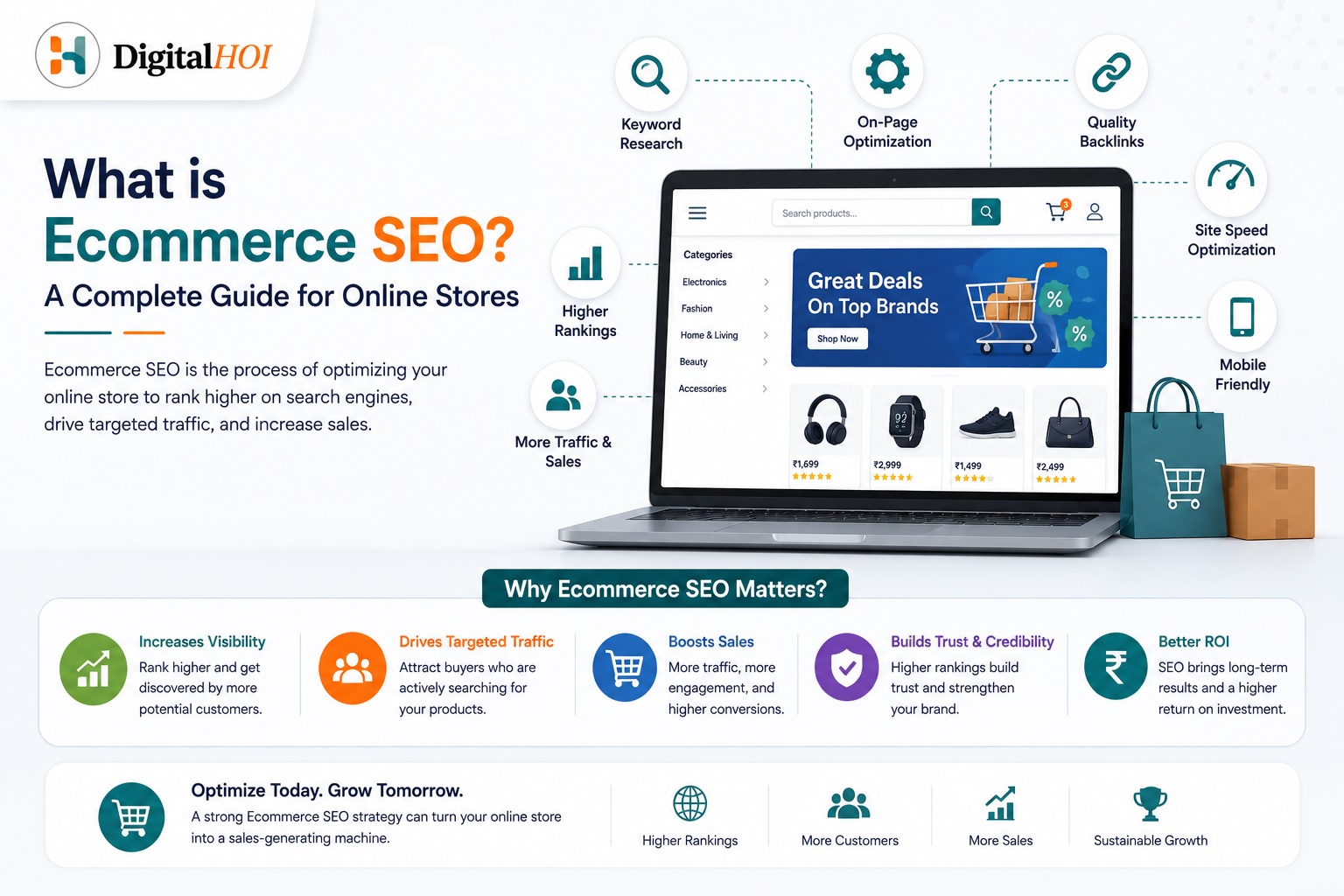
- Ecommerce SEO helps online stores improve search visibility and attract qualified organic traffic.
- Product pages, category pages, technical SEO, and content marketing all contribute to ecommerce success.
- SEO reduces dependence on paid advertising while supporting long-term growth.
- Keyword research helps identify product and category opportunities.
- Technical SEO is critical for large ecommerce websites.
- Content marketing supports product discovery and authority building.
- Ecommerce SEO requires ongoing optimization, monitoring, and strategic planning.
- Businesses that invest in SEO often achieve sustainable traffic, leads, and sales growth.
What is Ecommerce SEO? A Complete Guide for Online Stores
Running an online store is no longer just about having great products. With thousands of ecommerce websites competing for attention, visibility in search engines has become one of the most important factors influencing online sales.
Consumers rely heavily on Google and other search engines when researching products, comparing prices, and making purchasing decisions. If your products don't appear in search results, you're likely missing valuable opportunities to attract potential customers.
This is where Ecommerce SEO comes in.
Ecommerce SEO helps online stores improve their visibility in search engines, attract qualified traffic, and increase sales without relying solely on paid advertising.
Whether you operate a small online store or a large ecommerce marketplace, investing in Ecommerce SEO can create a sustainable source of traffic and revenue.
What is Ecommerce SEO?
Ecommerce SEO (Search Engine Optimization) is the process of optimizing an online store, product pages, category pages, and website content to improve visibility in organic search results.
The primary goal is to help potential customers find your products when searching online.
Examples of ecommerce searches include:
- Buy running shoes online
- Best laptops under ₹50,000
- Organic skincare products
- Men's formal shirts
- Wireless earbuds
When your website ranks higher for these searches, more potential customers discover your products, leading to increased traffic and sales.
Why Ecommerce SEO is Important
Many online stores depend heavily on paid advertising to generate traffic.
While paid ads can deliver immediate results, they also come with ongoing costs.
Ecommerce SEO offers several long-term advantages.
Increase Organic Traffic
SEO helps attract visitors actively searching for products.
Lower Customer Acquisition Costs
Organic traffic reduces dependence on paid advertising.
Improve Product Visibility
Better rankings increase product discovery opportunities.
Build Brand Authority
Higher search visibility strengthens trust and credibility.
Generate Consistent Sales
SEO can continue generating traffic and revenue long after content is published.
For ecommerce businesses seeking sustainable growth, SEO is often one of the most valuable long-term investments.
How Ecommerce SEO Works
Ecommerce SEO involves optimizing multiple areas of an online store.
These include:
Product Pages
Optimizing individual product listings.
Category Pages
Improving visibility for product collections.
Website Structure
Ensuring search engines can crawl and understand your store.
Content Marketing
Creating content that attracts potential customers.
Technical SEO
Improving website performance and user experience.
Together, these elements help improve rankings and attract qualified traffic.
Key Components of Ecommerce SEO
Keyword Research
Every successful SEO campaign begins with understanding how customers search.
Ecommerce keyword research focuses on identifying:
- Product keywords
- Category keywords
- Commercial intent keywords
- Long-tail search terms
- Buyer-focused queries
Examples:
Product Keywords
- Wireless Earbuds
- Running Shoes
Category Keywords
- Men's Footwear
- Mobile Accessories
Commercial Keywords
- Best Running Shoes Online
- Buy Wireless Earbuds
Targeting the right keywords helps attract customers closer to making a purchase.
Product Page Optimization
Product pages are among the most important assets in an ecommerce store.
Optimization areas include:
Product Titles
Clear, descriptive, and keyword-focused titles.
Product Descriptions
Unique content that highlights features and benefits.
Product Images
Optimized images with descriptive alt text.
Internal Links
Connecting products to related categories and content.
Customer Reviews
Adding trust signals and user-generated content.
Well-optimized product pages improve both rankings and conversions.
Category Page Optimization
Category pages often target broader, high-volume keywords.
Examples include:
- Men's Shoes
- Women's Clothing
- Electronics Accessories
Effective category pages include:
- SEO-friendly content
- Clear navigation
- Internal linking
- Optimized metadata
- User-friendly filtering
Category pages frequently become major traffic drivers for ecommerce websites.
Technical SEO
Technical SEO plays a crucial role in ecommerce performance.
Large online stores often face challenges such as:
- Duplicate content
- Crawl budget issues
- Broken links
- Slow page speeds
- Indexation problems
Important technical SEO factors include:
Mobile Optimization
Most ecommerce traffic now comes from mobile devices.
Site Speed
Faster websites improve both rankings and user experience.
Secure Website (HTTPS)
Security is essential for online transactions.
Structured Data
Schema markup helps search engines understand products.
XML Sitemaps
Support efficient crawling and indexing.
Ecommerce SEO vs Traditional SEO
Although they share similar principles, Ecommerce SEO differs from traditional SEO in several ways.
|
Ecommerce SEO |
Traditional SEO |
|
Product-focused |
Content-focused |
|
Optimizes product pages |
Optimizes service/content pages |
|
Emphasizes conversions |
Emphasizes lead generation |
|
Large site structures |
Typically smaller websites |
|
Product schema critical |
Less dependent on product schema |
Ecommerce websites often require more technical and structural optimization due to their size and complexity.
Common Ecommerce SEO Challenges
Online stores face several unique SEO challenges.
Duplicate Content
Product variations often create duplicate content issues.
Thin Product Pages
Limited product descriptions can reduce ranking potential.
Out-of-Stock Pages
Managing unavailable products requires careful SEO planning.
Large Inventory Management
Thousands of pages can create crawlability challenges.
Intense Competition
Many product categories are highly competitive.
A strategic SEO approach helps overcome these obstacles.
How Content Marketing Supports Ecommerce SEO
Many ecommerce businesses overlook content marketing.
However, informational content can attract potential customers earlier in the buying journey.
Examples include:
Buying Guides
Helping customers make informed decisions.
Product Comparisons
Comparing features and benefits.
Industry Trends
Building authority and trust.
FAQs
Addressing common customer concerns.
Educational Content
Supporting product discovery and purchase decisions.
Content marketing helps drive traffic beyond product searches.
Ecommerce SEO Best Practices
Successful online stores typically follow these best practices:
Conduct Ongoing Keyword Research
Search behavior evolves over time.
Create Unique Product Content
Avoid copying manufacturer descriptions.
Optimize Category Pages
Target broader commercial keywords.
Improve Website Speed
Enhance both rankings and conversions.
Use Product Schema
Improve search result visibility.
Build Internal Links
Strengthen site structure and navigation.
Encourage Customer Reviews
Increase trust and user-generated content.
Publish Helpful Content
Support product discovery and authority building.
How Long Does Ecommerce SEO Take?
SEO is a long-term strategy.
Typical timelines include:
Months 1–3
- Technical audits
- Keyword research
- Initial optimizations
Months 3–6
- Ranking improvements
- Increased visibility
- Traffic growth
Months 6–12+
- Stronger organic performance
- Increased sales opportunities
- Sustainable traffic growth
Results depend on competition, website authority, and SEO implementation quality.
Who Needs Ecommerce SEO?
Ecommerce SEO benefits virtually every online retailer.
Examples include:
Fashion Stores
Electronics Retailers
Beauty & Skincare Brands
Home & Furniture Stores
B2B Ecommerce Platforms
Multi-Brand Marketplaces
Whether you're launching a new store or scaling an established business, SEO can improve long-term growth potential.
Grow Your Online Store with Ecommerce SEO
Achieving consistent ecommerce growth requires more than paid advertising and promotions. It requires a long-term strategy that helps customers discover your products when they're actively searching.
At DigitalHOI, our Ecommerce SEO Services help online stores improve rankings, increase organic traffic, optimize product visibility, and drive more sales through data-driven SEO strategies.
Whether you're a growing ecommerce brand or an established online retailer, we help create sustainable search visibility that supports long-term business growth.