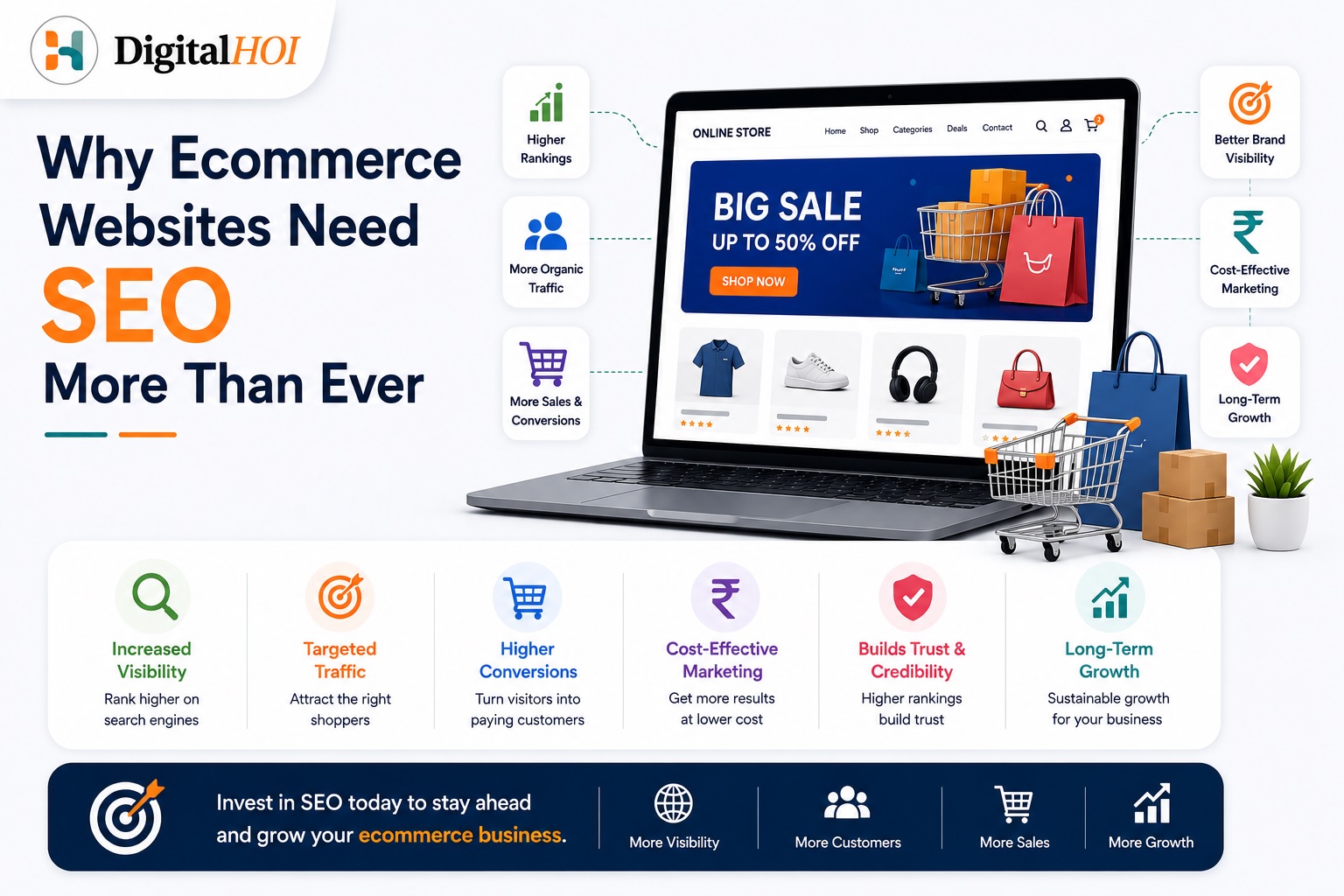
Key Takeaways
- Ecommerce SEO has become essential for sustainable online store growth.
- Organic search attracts highly qualified visitors with strong purchasing intent.
- Rising advertising costs make SEO an increasingly valuable customer acquisition channel.
- SEO supports every stage of the customer journey, from awareness to purchase.
- Product pages and category pages both play critical roles in ecommerce visibility.
- Content marketing helps attract and educate potential customers.
- Technical SEO improves rankings, user experience, and conversions.
- SEO reduces dependence on paid advertising and marketplace platforms.
- Businesses investing in Ecommerce SEO gain a long-term competitive advantage.
Why Ecommerce Websites Need SEO More Than Ever
The ecommerce industry has experienced tremendous growth over the last decade. From small niche stores to large online marketplaces, businesses are increasingly competing for customer attention in search engines, social media platforms, and online advertising networks.
While paid advertising continues to play an important role in ecommerce marketing, rising advertising costs, increased competition, and changing consumer behavior have made organic search visibility more valuable than ever.
Today's consumers don't simply click the first ad they see. They research products, compare brands, read reviews, and search for recommendations before making purchasing decisions.
This shift in buying behavior has made Ecommerce SEO one of the most important growth channels for online stores.
Businesses that invest in SEO gain a significant competitive advantage by attracting customers at every stage of the buying journey while reducing dependence on paid traffic sources.
The Evolution of Ecommerce Marketing
A few years ago, many online stores could generate substantial sales through paid advertising alone.
Platforms such as:
- Google Ads
- Facebook Ads
- Instagram Ads
- YouTube Ads
offered affordable traffic and predictable returns.
Today, the landscape has changed dramatically.
Businesses face:
- Higher advertising costs
- Increased competition
- Ad fatigue
- Reduced tracking accuracy
- Greater customer acquisition costs
As a result, many ecommerce brands are looking for sustainable growth channels that continue delivering results over time.
SEO has emerged as one of the most effective solutions.
Modern Consumers Begin Their Journey with Search
Before making a purchase, most customers perform multiple searches.
Examples include:
Informational Searches
-
Best laptops for students
-
Running shoes buying guide
-
Skincare products for oily skin
Commercial Searches
-
Best wireless earbuds under ₹5,000
-
Top fitness trackers
-
Best ecommerce platforms
Transactional Searches
-
Buy wireless earbuds online
-
Order running shoes
-
Discount skincare products
SEO helps online stores appear during each stage of the customer journey.
This creates opportunities to influence purchasing decisions long before competitors do.
Why SEO Has Become Essential for Ecommerce Growth
1. Organic Search Drives High-Intent Traffic
Not all website visitors are equal.
SEO attracts users actively searching for products, solutions, and recommendations.
These visitors often have:
-
Strong buying intent
-
Product awareness
-
Purchase motivation
Because users are already searching for relevant products, organic traffic frequently converts better than many other traffic sources.
2. Paid Advertising Costs Continue to Increase
Customer acquisition costs have risen across most advertising platforms.
Factors contributing to this include:
-
Increased advertiser competition
-
Auction-based bidding systems
-
Growing market saturation
As more businesses compete for the same audiences, advertising becomes more expensive.
SEO helps create a long-term traffic source that doesn't require paying for every visitor.
3. SEO Supports Long-Term Business Growth
Advertising generates traffic only while campaigns are active.
Once the budget stops, visibility disappears.
SEO works differently.
A well-optimized page can continue attracting visitors for months or even years.
Benefits include:
-
Sustainable traffic
-
Lower acquisition costs
-
Ongoing lead generation
-
Long-term visibility
This makes SEO one of the most valuable long-term investments for ecommerce businesses.
4. Customers Trust Organic Search Results
Many consumers trust organic search results more than advertisements.
When users see a website ranking naturally on Google, it often signals:
-
Authority
-
Relevance
-
Credibility
Strong organic visibility can positively influence customer perception and purchasing behavior.
How SEO Supports Every Stage of the Ecommerce Funnel
Successful ecommerce marketing requires attracting customers throughout the buying journey.
SEO helps accomplish this by targeting different search intents.
Awareness Stage
At this stage, customers are researching solutions.
Examples:
-
Best laptops for gaming
-
Benefits of organic skincare
-
Home office setup ideas
Educational content helps introduce potential customers to your brand.
Consideration Stage
Customers begin comparing options.
Examples:
-
Laptop comparison guide
-
Best wireless earbuds reviews
-
Product feature comparisons
SEO content helps establish trust and influence decision-making.
Purchase Stage
Customers are ready to buy.
Examples:
-
Buy gaming laptop online
-
Wireless earbuds price
-
Order skincare products
Optimized product and category pages help capture these conversions.
SEO Helps Product Pages Generate More Sales
Product pages are among the most important assets in an ecommerce store.
SEO improves:
Product Discoverability
Helping customers find products through search engines.
Product Rankings
Increasing visibility for purchase-related searches.
Click-Through Rates
Improving search result attractiveness.
Conversion Opportunities
Driving qualified traffic to product pages.
Well-optimized product pages can become significant revenue drivers.
Category Pages Have Massive SEO Potential
Many ecommerce stores focus exclusively on product pages while overlooking category pages.
Category pages often target broader commercial keywords such as:
-
Running Shoes
-
Men's Watches
-
Wireless Earbuds
-
Office Furniture
These keywords typically generate:
-
Higher search volumes
-
Strong commercial intent
-
Valuable traffic opportunities
Optimizing category pages can significantly increase organic visibility.
SEO Reduces Dependence on Marketplace Platforms
Many businesses rely heavily on ecommerce marketplaces.
While marketplaces provide visibility, they also present challenges:
-
Intense competition
-
Platform fees
-
Limited customer ownership
-
Reduced brand control
SEO helps businesses drive customers directly to their own websites, increasing profitability and strengthening brand relationships.
Content Marketing Fuels Ecommerce SEO Success
Content remains one of the most effective ways to attract potential customers.
Examples include:
Buying Guides
Helping customers choose products.
Product Comparisons
Supporting decision-making.
How-To Articles
Addressing customer questions.
Industry Insights
Building authority and trust.
FAQs
Improving user experience and search visibility.
Content marketing helps online stores capture traffic beyond product-focused searches.
Technical SEO Matters More Than Ever
Search engines increasingly prioritize user experience.
Technical SEO improvements include:
Faster Website Speed
Improves both rankings and conversions.
Mobile Optimization
Supports growing mobile commerce trends.
Secure Browsing (HTTPS)
Builds customer trust.
Structured Data
Helps search engines understand products.
Improved Navigation
Enhances user experience and crawlability.
Technical SEO often creates significant performance improvements for ecommerce websites.
SEO Creates a Competitive Advantage
Many online stores still rely heavily on paid traffic.
Businesses that invest in SEO gain several advantages:
-
Increased visibility
-
Reduced marketing costs
-
Stronger authority
-
Sustainable traffic
-
Improved profitability
Over time, SEO can become a major competitive differentiator.
Common Mistakes Ecommerce Businesses Make
Many online retailers struggle because they:
Ignore SEO Until Traffic Declines
SEO should be proactive rather than reactive.
Use Manufacturer Descriptions
Duplicate content limits ranking potential.
Neglect Technical SEO
Site performance directly impacts visibility.
Focus Only on Paid Advertising
This increases long-term acquisition costs.
Fail to Create Content
Content supports rankings throughout the customer journey.
Avoiding these mistakes can significantly improve SEO performance.
Future Trends Making Ecommerce SEO Even More Important
Several trends are increasing the value of SEO.
AI-Powered Search
Search engines continue evolving to provide more personalized results.
Voice Search
Consumers increasingly search using voice assistants.
Mobile Commerce Growth
Mobile shopping continues expanding rapidly.
Rising Advertising Costs
Paid acquisition becomes increasingly expensive.
Increased Competition
More businesses are investing in ecommerce.
As competition intensifies, strong organic visibility becomes even more valuable.
Accelerate Ecommerce Growth with Strategic SEO
Growing an ecommerce business requires more than advertising campaigns and promotional offers. Long-term success depends on your ability to attract customers consistently through organic search.
At DigitalHOI, our Ecommerce SEO Services help online stores improve search visibility, optimize product and category pages, increase organic traffic, and generate more sales through proven SEO strategies.
Whether you're launching a new online store or scaling an established ecommerce brand, our team can help create a sustainable growth strategy built around search.